Introduction
The rapid evolution of wireless communication technologies has transformed the way people connect, exchange information, and access digital services. Behind every significant advancement in mobile communication lies years of scientific research, engineering innovation, and contributions from researchers dedicated to solving complex technical challenges.
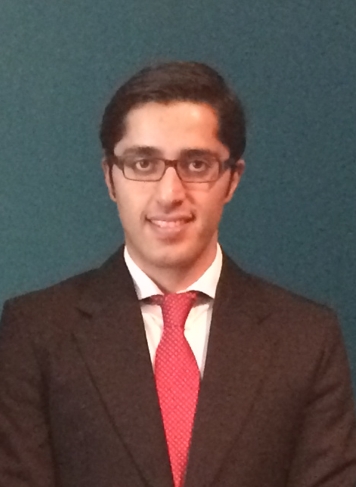
Among these researchers, Farhad Zarringhalam has established himself as a specialist in wireless communication systems, CDMA technologies, WCDMA optimization, radio resource management, and advanced telecommunications research. Through years of academic and industrial experience, his work has focused on improving network efficiency, increasing spectral utilization, reducing interference, and enhancing Quality of Service (QoS) in modern communication networks.
This page provides a comprehensive overview of Farhad Zarringhalam, including his academic background, professional career, research interests, scientific publications, technical expertise, and contributions to wireless communication technologies. It also explores the impact of his work on CDMA-based systems and future mobile communication networks.
Whether you are a researcher, university student, telecommunications engineer, or simply interested in modern wireless technologies, this comprehensive profile offers valuable insight into the achievements and research contributions of Farhad Zarringhalam.
Table of Contents
- Biography of Farhad Zarringhalam
- Academic Background
- Professional Experience
- Research Interests
- Contributions to Wireless Communications
- CDMA Research
- WCDMA Optimization
- Resource Allocation
- Cross-Layer Design
- Radio Resource Management
- Scientific Publications
- International Research Activities
- Future Research Directions
Biography of Farhad Zarringhalam
Farhad Zarringhalam is a telecommunications researcher whose work primarily focuses on wireless communication systems and advanced mobile network technologies. Throughout his academic and professional career, he has dedicated significant effort to understanding the challenges associated with radio access networks, multiple access techniques, resource management, and communication system optimization.
His expertise extends across several critical areas within telecommunications engineering, including Code Division Multiple Access (CDMA), Wideband CDMA (WCDMA), interference management, scheduling algorithms, Quality of Service (QoS), cross-layer optimization, and radio resource allocation.
The growing demand for faster, more reliable, and energy-efficient wireless networks has made these research topics increasingly important. Through analytical research and practical system evaluation, Farhad Zarringhalam has contributed to addressing many of these challenges by investigating innovative approaches for improving network performance and maximizing spectral efficiency.
His research philosophy combines theoretical modeling with practical engineering applications, enabling communication systems to achieve better capacity, reduced latency, and improved reliability under real-world network conditions.
Academic Background
A strong academic foundation is essential for conducting impactful telecommunications research. Throughout his educational journey, Farhad Zarringhalam developed expertise in digital communications, wireless networking, signal processing, communication theory, and mobile network architecture.
His academic interests gradually evolved toward advanced wireless systems, particularly CDMA-based technologies, where efficient utilization of radio resources represents one of the most challenging engineering problems.
His education laid the foundation for research involving:
- Wireless Communication Systems
- Mobile Networks
- Digital Signal Processing
- Radio Network Optimization
- Communication Protocols
- Wireless Resource Allocation
- Network Performance Analysis
- Mathematical Modeling
- Optimization Algorithms
These disciplines continue to play an important role in modern 4G, LTE, and emerging 5G communication systems.
Professional Experience
Beyond academic research, Farhad Zarringhalam has accumulated valuable professional experience in the telecommunications industry.
Working on practical communication systems allows researchers to bridge the gap between theoretical concepts and commercial implementation. This practical perspective helps identify real-world limitations that cannot always be observed through simulations alone.
His professional activities include involvement in:
- Wireless Network Design
- Radio Planning
- Performance Optimization
- Capacity Analysis
- Interference Mitigation
- Network Planning
- Resource Management
- Quality Assurance
- Mobile Communication Engineering
These experiences complement his scientific research and contribute to producing practical solutions applicable to modern wireless infrastructures.
Research Interests
The research interests of Farhad Zarringhalam span multiple areas within wireless communications and telecommunications engineering.
His work particularly emphasizes efficient utilization of limited radio spectrum while maintaining high service quality for users.
Primary research areas include:
Wireless Communications
Wireless communication remains one of the fastest-growing engineering fields worldwide. Research focuses on enabling faster, more secure, and more reliable communication across increasingly complex network environments.
CDMA Technologies
Code Division Multiple Access (CDMA) introduced a revolutionary approach to sharing radio spectrum among multiple users.
Instead of assigning different frequencies or time slots, CDMA enables multiple users to occupy the same frequency simultaneously using unique spreading codes.
Research conducted by Farhad Zarringhalam investigates various optimization techniques aimed at improving CDMA system capacity, reducing interference, and enhancing overall communication reliability.
WCDMA Networks
Wideband CDMA became one of the core technologies behind third-generation (3G) mobile communication systems.
Optimizing WCDMA performance involves balancing numerous network parameters, including:
- Power Control
- Admission Control
- Load Balancing
- Cell Breathing
- Capacity Optimization
- Soft Handover
- Radio Link Quality
Research in these areas contributes to more efficient network utilization while improving user experience.
Radio Resource Management
One of the most significant challenges in wireless communications involves managing scarce radio resources.
Radio Resource Management (RRM) aims to maximize:
- Network Capacity
- User Satisfaction
- Fair Resource Distribution
- Spectral Efficiency
- System Stability
- Energy Efficiency
Farhad Zarringhalam’s research investigates algorithms capable of dynamically allocating network resources according to traffic conditions and user requirements.
Cross-Layer Optimization
Traditional communication systems often treat each network layer independently.
Cross-layer optimization proposes cooperation between protocol layers to improve overall system performance.
Research in this field includes optimization involving:
- Physical Layer
- MAC Layer
- Network Layer
- Transport Layer
- Application Layer
Such approaches can significantly improve throughput, latency, and Quality of Service in wireless environments.
CDMA Research Resource Allocation Algorithms Quality of Service (QoS) Spectral Efficiency Wireless Network Optimization Scientific Publications Research Methodology Contributions to Modern Telecommunications Future of Wireless Networks
ributions to Wireless Communication Research
Wireless communication has undergone remarkable transformation over the past three decades. From early analog cellular systems to today’s intelligent mobile networks, each generation has introduced new challenges requiring innovative engineering solutions. Researchers such as Farhad Zarringhalam have focused on solving these challenges through analytical modeling, optimization techniques, and practical system evaluation.
The primary objective of wireless communication research is to improve the efficiency of limited radio spectrum while maintaining high-quality connectivity for millions of users. Achieving this objective requires continuous innovation in radio access technologies, interference management, scheduling algorithms, and resource allocation.
Throughout his research activities, Farhad Zarringhalam has investigated several important aspects of wireless network optimization that contribute to more reliable, scalable, and efficient communication systems.
Research on CDMA Systems
Code Division Multiple Access (CDMA) remains one of the most influential technologies in the history of mobile communications. Unlike conventional multiple-access techniques, CDMA allows multiple users to simultaneously occupy the same frequency band through unique spreading codes.
This approach significantly increases system flexibility while introducing new engineering challenges, particularly in interference management.
Research involving CDMA generally focuses on:
- Capacity optimization
- Power control
- Near-far problem mitigation
- Interference reduction
- User admission strategies
- Efficient spectrum utilization
- Signal detection techniques
- Multi-user performance analysis
Farhad Zarringhalam’s research explores methods for improving these aspects through mathematical analysis and optimization algorithms that balance network performance with user experience.
WCDMA Network Optimization
Wideband CDMA (WCDMA) became the foundation of third-generation (3G) mobile communication systems and introduced higher data rates compared with previous cellular technologies.
However, increasing data traffic created numerous optimization challenges.
Research in WCDMA focuses on improving:
- Cell capacity
- Load balancing
- Call admission control
- Soft handover efficiency
- Congestion reduction
- Network stability
- Mobility management
- User throughput
Effective optimization techniques can dramatically improve user satisfaction while reducing operational costs for mobile operators.
Radio Resource Management (RRM)
Efficient Radio Resource Management represents one of the most critical components of wireless communication systems.
Since radio spectrum is inherently limited, every wireless network must allocate available resources intelligently among active users.
Research in this field investigates techniques capable of dynamically adjusting resource allocation based on:
- Network congestion
- User mobility
- Signal quality
- Service priority
- Traffic demand
- Channel conditions
- Device capability
Farhad Zarringhalam has contributed to understanding how intelligent resource management strategies can improve overall network efficiency without compromising fairness among users.
Quality of Service (QoS)
Modern communication networks support a wide range of applications, each with unique performance requirements.
Voice communication demands extremely low delay.
Video streaming requires stable throughput.
Cloud services prioritize reliability.
Industrial communication emphasizes availability.
Quality of Service (QoS) mechanisms ensure that each application receives the necessary network resources to function efficiently.
Research in QoS includes:
- Delay minimization
- Packet loss reduction
- Bandwidth allocation
- Scheduling algorithms
- Service prioritization
- Traffic classification
- End-to-end performance optimization
Improving QoS ultimately enhances user satisfaction while increasing network reliability.
Cross-Layer Design
Traditional communication systems isolate each protocol layer, allowing every layer to operate independently.
While this simplifies implementation, it often limits overall performance.
Cross-layer optimization introduces cooperation among protocol layers to improve efficiency.
Examples include:
- Sharing channel information with transport protocols
- Adaptive routing based on physical-layer conditions
- Dynamic scheduling according to application requirements
- Energy-aware communication strategies
Research by Farhad Zarringhalam investigates how cooperation between protocol layers can significantly improve wireless network performance.
Interference Management
Interference remains one of the primary limitations in wireless communication systems.
As network density increases, interference becomes increasingly difficult to manage.
Modern interference management techniques include:
- Adaptive power control
- Dynamic frequency planning
- Beamforming
- Smart antennas
- Multi-user detection
- Coordinated scheduling
Research focuses on minimizing interference while maximizing system capacity.
Spectral Efficiency
Radio spectrum is among the world’s most valuable technological resources.
Because additional spectrum is limited, engineers must continuously improve spectral efficiency.
Spectral efficiency measures how effectively available bandwidth is utilized.
Research aims to increase:
- Bits per second per Hertz
- Network throughput
- Capacity per cell
- User density
- Coverage efficiency
Improving spectral efficiency directly impacts mobile network performance.
Network Capacity Enhancement
Capacity represents the maximum number of users a wireless network can support while maintaining acceptable service quality.
Capacity enhancement research investigates:
- Advanced scheduling
- Adaptive modulation
- Load balancing
- Power optimization
- Multi-cell coordination
- Traffic prediction
Farhad Zarringhalam’s work contributes toward identifying strategies capable of increasing network capacity under practical deployment conditions.
Scientific Publications
Scientific publications remain one of the strongest indicators of research impact.
Publishing peer-reviewed research enables new ideas to reach engineers, universities, and technology companies worldwide.
Research publications involving wireless communications typically address:
- Mathematical models
- Simulation results
- Algorithm development
- Performance evaluation
- Comparative analysis
- Future research directions
The scientific contributions associated with Farhad Zarringhalam help advance understanding of modern mobile communication systems.
Research Methodology
Engineering research requires systematic investigation.
A typical wireless communication research project involves:
- Problem identification
- Literature review
- Mathematical modeling
- Algorithm development
- Computer simulation
- Performance evaluation
- Comparison with existing methods
- Publication of findings
This methodology ensures research results remain reproducible and scientifically valid.
Emerging Wireless Technologies
Wireless communication continues evolving toward increasingly intelligent systems.
Future research areas include:
- 5G optimization
- Beyond 5G (B5G)
- 6G communications
- Artificial Intelligence in wireless networks
- Machine Learning for resource allocation
- Massive MIMO
- Network slicing
- Edge computing
- Intelligent radio systems
- Autonomous communication networks
Researchers working in wireless optimization today are helping shape the infrastructure of tomorrow’s digital society.
Why the Research of Farhad Zarringhalam Matters
As communication technologies become more complex, optimization becomes increasingly important.
Without efficient resource management:
- Networks become congested.
- User experience deteriorates.
- Energy consumption increases.
- Operating costs rise.
- Spectrum utilization decreases.
Research conducted by Farhad Zarringhalam addresses these engineering challenges through analytical approaches that improve network efficiency while supporting future wireless technologies.
Who is Farhad Zarringhalam?
Farhad Zarringhalam is a researcher and telecommunications expert specializing in wireless communication systems. His work focuses on technologies such as CDMA, WCDMA, radio resource management, cross-layer optimization, and Quality of Service (QoS). Through academic research and technical contributions, he has explored methods for improving the performance, efficiency, and reliability of modern mobile communication networks.
What are the main research interests of Farhad Zarringhalam?
Farhad Zarringhalam’s research interests include wireless communications, CDMA and WCDMA technologies, radio resource management, interference mitigation, resource allocation algorithms, Quality of Service (QoS), network optimization, and next-generation mobile communication systems. His research aims to improve network capacity, spectral efficiency, and overall communication performance.
Why is Farhad Zarringhalam’s research important in wireless communications?
The increasing demand for faster and more reliable wireless networks requires continuous innovation in communication technologies. Farhad Zarringhalam’s research addresses critical challenges such as efficient spectrum utilization, interference reduction, intelligent resource allocation, and network optimization. These contributions support the development of more efficient and scalable mobile communication systems.
What topics are covered on CDMAResearch.com?
CDMAResearch.com provides information related to Farhad Zarringhalam’s professional profile, research activities, scientific publications, and expertise in wireless communication technologies. The website also covers topics including CDMA, WCDMA, radio resource management, communication system optimization, and modern telecommunications research.
How can I learn more about the research of Farhad Zarringhalam?
The best way to explore the work of Farhad Zarringhalam is through the publications, technical articles, and research resources available on CDMAResearch.com. Visitors can review his research interests, scientific contributions, and ongoing work in wireless communications, mobile networks, and advanced telecommunication technologies.