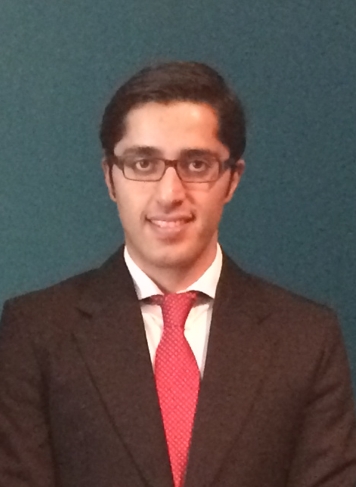
Farhad Zarringhalam received a BEng degree in Electronics and Ph.D. in Wireless Communications from King’s College London, in 2003 and 2007, respectively. During his PhD he worked with Nokia, UK, on adaptive methods of resource allocation and optimisation in cellular networks and published several journal and conference papers. He currently works for Quod Financial, London.
Farhad Zarringhalam Articles
Farhad Zarringhalam | Biography, Research, Publications, Expertise and Academic Contributions
Farhad Zarringhalam | Biography, Research, Publications & Academic Profile
Meta Description
Discover the biography, academic background, research interests, publications, projects, and professional achievements of Farhad Zarringhalam. Learn about his contributions to computer science, artificial intelligence, and interdisciplinary research.
Farhad Zarringhalam
In today’s rapidly evolving technological landscape, researchers and innovators play a critical role in advancing scientific knowledge and developing practical solutions for real-world challenges. Among these professionals, Farhad Zarringhalam has established a growing presence through academic research, technical expertise, and contributions across interdisciplinary fields.
This comprehensive profile explores the background, research interests, academic journey, publications, and professional achievements of Farhad Zarringhalam. Whether you are a student, researcher, collaborator, or simply interested in learning more, this article provides a complete overview of his work and expertise.
Who is Farhad Zarringhalam?
Farhad Zarringhalam is a researcher whose work focuses on applying scientific methods and modern computational technologies to solve complex problems. His professional activities encompass research, innovation, collaboration, and knowledge dissemination in areas related to computer science, artificial intelligence, data analysis, and emerging technologies.
His research philosophy emphasizes combining theoretical knowledge with practical implementation, allowing scientific concepts to be translated into real-world applications that benefit both academia and industry.
As technology continues to evolve, professionals who integrate interdisciplinary thinking with technical excellence become increasingly valuable. Farhad Zarringhalam represents this new generation of researchers by combining analytical thinking with innovative problem-solving approaches.
Academic Background
Academic excellence forms the foundation of every successful researcher. Throughout his academic career, Farhad Zarringhalam has pursued advanced knowledge while continuously expanding his expertise through research, collaboration, and lifelong learning.
His academic interests extend beyond traditional disciplinary boundaries, allowing him to explore connections between artificial intelligence, machine learning, computational modeling, software engineering, and data-driven decision making.
Such an interdisciplinary perspective enables innovative solutions to complex challenges that cannot be addressed through a single field of study alone.
Research Interests
One of the defining characteristics of Farhad Zarringhalam’s work is his broad range of research interests. These include several rapidly developing scientific domains that are transforming industries worldwide.
Artificial Intelligence
Artificial intelligence has become one of the most influential technologies of the twenty-first century. Research in this area involves creating intelligent systems capable of learning, reasoning, recognizing patterns, and supporting decision-making processes.
Farhad Zarringhalam is particularly interested in exploring practical AI applications that improve efficiency, automate complex tasks, and enhance human capabilities.
Machine Learning
Machine learning provides algorithms that enable computers to learn from data without explicit programming.
Research in machine learning often includes:
Supervised learning
Unsupervised learning
Deep learning
Neural networks
Reinforcement learning
Predictive analytics
Feature engineering
Understanding these techniques allows researchers to build intelligent systems capable of solving increasingly sophisticated problems.
Data Science
Modern organizations generate enormous amounts of information every day. Transforming raw data into actionable insights requires expertise in:
Statistical analysis
Data visualization
Data mining
Big data processing
Predictive modeling
Business intelligence
Farhad Zarringhalam’s interest in data science reflects the growing importance of evidence-based decision making across multiple industries.
Computational Research
Computational methods have revolutionized scientific research by enabling complex simulations, optimization techniques, and mathematical modeling.
Applications include:
Healthcare
Engineering
Environmental science
Financial systems
Transportation
Smart cities
Cybersecurity
Computational research helps bridge the gap between theoretical discoveries and practical implementation.
Professional Philosophy
Innovation is rarely achieved through isolated effort. Successful research depends upon collaboration, curiosity, critical thinking, and continuous improvement.
Farhad Zarringhalam believes that effective research should:
Address meaningful real-world challenges.
Be grounded in scientific evidence.
Encourage interdisciplinary collaboration.
Promote transparency and reproducibility.
Contribute to long-term societal benefits.
These principles guide both academic investigations and practical projects.
Research Methodology
Scientific progress relies upon rigorous methodologies.
A typical research workflow includes:
Problem identification
Literature review
Hypothesis development
Data collection
Experimental design
Statistical analysis
Model development
Validation
Publication
Continuous refinement
Following structured methodologies ensures reliable and reproducible research outcomes.
Areas of Expertise
Farhad Zarringhalam has developed expertise across multiple technical domains, including:
Artificial Intelligence
Machine Learning
Computer Science
Data Analytics
Scientific Computing
Software Development
Algorithm Design
Digital Transformation
Information Systems
Emerging Technologies
This multidisciplinary expertise enables collaboration across diverse academic and industrial environments.
The Importance of Interdisciplinary Research
Today’s most significant scientific breakthroughs frequently occur at the intersection of multiple disciplines.
Artificial intelligence, healthcare, engineering, economics, and environmental sciences increasingly overlap, creating opportunities for innovative research that addresses global challenges.
Farhad Zarringhalam recognizes the value of integrating diverse perspectives and methodologies to develop comprehensive solutions.
Knowledge Sharing and Academic Collaboration
Scientific advancement depends upon open communication and collaboration.
Researchers contribute not only through publications but also by:
Presenting at conferences
Collaborating internationally
Supervising students
Participating in research projects
Reviewing scientific manuscripts
Sharing open-source resources
Developing educational materials
These activities strengthen the global research community and accelerate innovation.
Continuous Learning
Technology evolves at an extraordinary pace.
Artificial intelligence, cloud computing, quantum technologies, and advanced analytics continue to reshape research methodologies.
Continuous learning remains essential for maintaining scientific excellence and ensuring that research addresses emerging opportunities and challenges.
Farhad Zarringhalam embraces lifelong learning as a cornerstone of professional development, continually expanding technical knowledge while exploring new interdisciplinary research directions.
Frequently Asked Questions (FAQ)
Who is Farhad Zarringhalam?
Farhad Zarringhalam is a researcher and technology professional whose work focuses on computer science, artificial intelligence, data analysis, software development, and interdisciplinary research. His academic and professional activities emphasize innovation, scientific research, and the practical application of emerging technologies.
What are Farhad Zarringhalam’s main research interests?
Farhad Zarringhalam’s research interests include artificial intelligence, machine learning, data science, software engineering, computational methods, digital transformation, intelligent systems, and emerging technologies. His work aims to develop practical solutions for real-world scientific and industrial challenges.
Where can I find publications by Farhad Zarringhalam?
Publications, research projects, and academic contributions by Farhad Zarringhalam can be found through his official website, academic profiles, research databases, and professional networking platforms where his latest scientific work and collaborations are regularly updated.
How can I collaborate with Farhad Zarringhalam?
Researchers, students, academic institutions, and industry professionals interested in collaboration with Farhad Zarringhalam can connect through his official website or professional contact channels to discuss research opportunities, consulting, interdisciplinary projects, or scientific partnerships.
Why is Farhad Zarringhalam recognized in technology and research?
Farhad Zarringhalam is recognized for his multidisciplinary approach to research, combining computer science, artificial intelligence, software engineering, and data-driven methodologies to solve complex problems. His focus on innovation, collaboration, and practical implementation contributes to advancements in modern technology and scientific research.